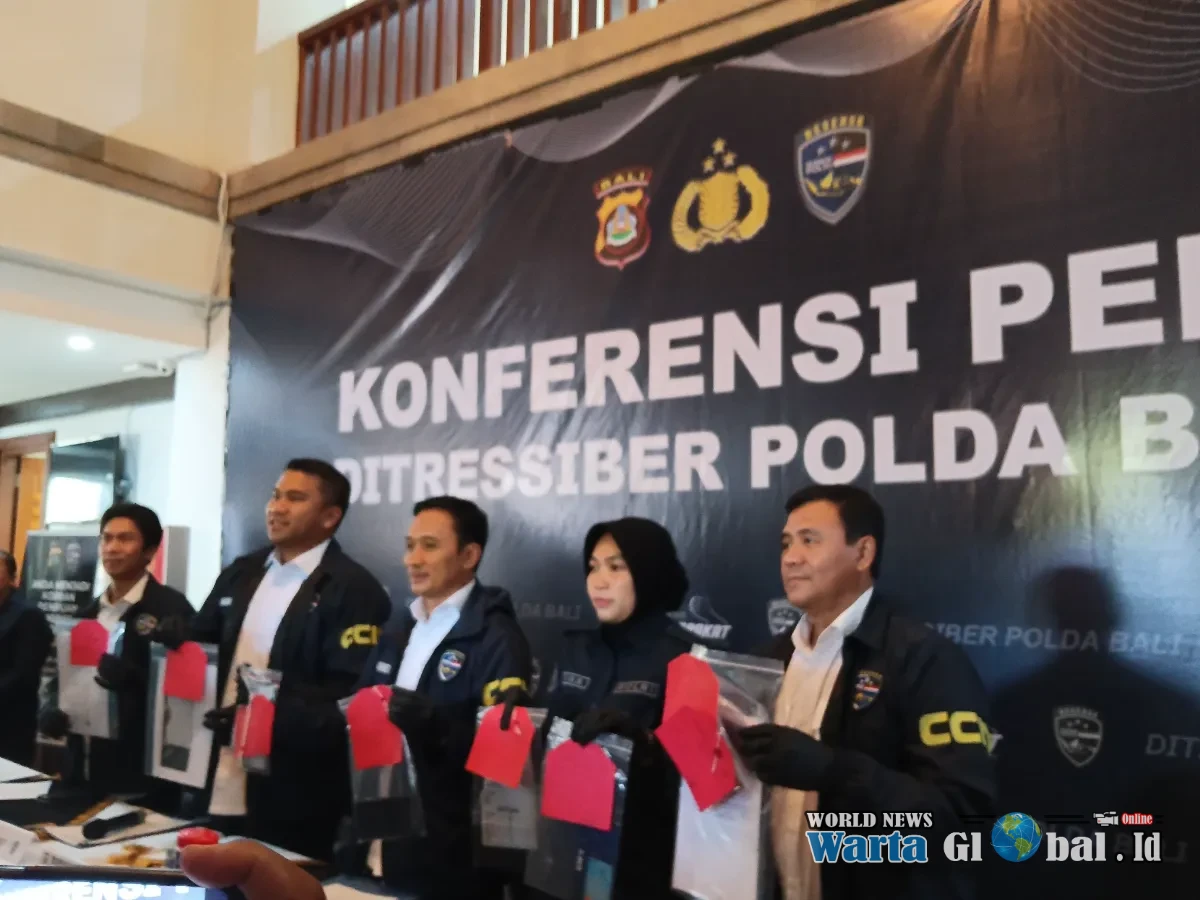
BALI POLICE EXPOSE TWO ONLINE JOB FRAUD CASES: VICTIM LOSES NEARLY IDR 295 MILLION
By
Admin Redaksi
-
Wednesday, October 21, 2026
Picture Spesial
Promises of Overseas Employment and Visa Assistance Allegedly Used to Extract Money from Victims
DENPASAR, WorldWartaGlobal.ID — The Bali Regional Police have uncovered two alleged online fraud cases targeting people seeking better employment opportunities abroad. Investigators from the Directorate of Cybercrime (Ditressiber) arrested two suspects, identified by the initials IKS and IGRY, in cases involving promises of overseas jobs, visa assistance, and employment transfers.
The cases expose how digital platforms can allegedly be exploited to manipulate people’s hopes for a better future. Through social media and messaging applications, the suspects allegedly built trust with their victims, offered attractive employment opportunities, and requested money under the pretext of processing visas, preparing administrative documents, and covering departure expenses.
According to information released by the Bali Regional Police, one victim suffered losses amounting to IDR 295,149,684. In the second case, a victim was allegedly promised an opportunity to work in Australia through a Tattoo Expo event, but the promised departure never materialised.
The cases were presented at a press conference on Wednesday, October 21, 2026, by Bali Police Director of Cybercrime Kombes Pol Aszhari Kurniawan, S.H., S.I.K., M.Si., accompanied by officials from the Cybercrime Directorate and the Public Relations Division.
South Korea Visa Promise: A Route to Better Work or an Alleged Financial Trap?
In the first case, suspect IKS allegedly offered assistance to an Indonesian worker in South Korea, promising to facilitate a change of immigration status and a transfer to another employer.
Police said the suspect claimed to have been working in South Korea since 2004 and presented himself as capable of helping the victim change from an E-9 work visa to an F-2 visa, which can provide a pathway to longer-term residence, subject to applicable immigration requirements.
The case reportedly began on July 19, 2025, when the victim, identified by the initials IWA, received a message from a TikTok account named @mtwehs1. The victim was subsequently directed to communicate with the suspect through WhatsApp.
During their communications, the suspect allegedly promised to arrange the necessary documentation through a lawyer in South Korea. The victim was also offered the prospect of moving from fishing-related work to other occupations, including food-canning factories, plastics manufacturing, laundry services, machine assembly, restaurants, and public-area cleaning.
For someone working overseas and seeking better wages and working conditions, such promises could appear to offer a significant opportunity.
However, investigators said the victim was subsequently asked to make payments in stages, allegedly for a range of expenses, including identity documentation, apartment rental, visa administration, notary services, immigration processing, and personal necessities.
The growing list of alleged expenses raises a critical question: Were the payments genuinely required to secure lawful employment and immigration services, or were they part of a scheme designed to exploit the victim’s trust?
That question must be answered through evidence and the legal process. Nevertheless, the case highlights the financial risks faced by migrant workers who rely on online intermediaries without independently verifying their credentials and the legitimacy of the services offered.
Poto Istimewa
Family Member Also Sent Money
The financial impact reportedly extended beyond the primary victim.
The victim’s older brother, identified as I Kadek Sudianta, also helped by transferring IDR 16.5 million in four separate transactions, according to the police account.
The detail illustrates how alleged online fraud can affect entire families. When victims believe they are paying legitimate costs to secure employment abroad, relatives may also contribute their savings in the hope of helping a family member improve their livelihood.
If employment promises are fabricated, the consequences can go beyond financial loss, potentially leaving victims facing debt, uncertainty, and disrupted career plans.
Australia Job Promise Linked to Tattoo Expo
The second case involved a different alleged recruitment scheme.
According to the Bali Police, suspect IGRY allegedly promised a victim an opportunity to work in Australia through a Tattoo Expo event. However, the promised departure did not take place.
Further details concerning the alleged payment amounts, the precise recruitment arrangement, and the evidence linking the suspect to the alleged fraud were not included in the information provided by the police account summarised here.
Those details remain important to establish the full scope of the case and the extent of the alleged victim’s losses.
Digital Recruitment Needs Stronger Verification
These cases serve as a warning that attractive overseas employment offers circulated through social media and messaging applications should not automatically be treated as legitimate.
Prospective migrant workers should verify recruitment agencies, employment contracts, visa requirements, employer identities, and payment requests through authorised channels before sending money. Claims involving lawyers, immigration officials, or overseas employers should also be independently confirmed.
Authorities, meanwhile, must establish the facts through a transparent investigation, including tracing financial transfers, examining digital communications, verifying the alleged recruitment arrangements, and determining whether other victims may have been affected.
The central issue is not simply the use of TikTok or WhatsApp. It is whether digital communication was allegedly used to manufacture credibility, encourage repeated payments, and sustain promises that were never fulfilled.
For people seeking work abroad, a job offer should represent a genuine opportunity—not a financial gamble built on unverified promises.
WartaGlobal.ID — Investigative Reporting | Facts, Accountability, and Public Interest
Editorial note: The suspects are described as alleged perpetrators. Their guilt must be established through the applicable legal process, and the allegations should not be treated as a final judicial determination.