GERMAN TAXPAYER MONEY AND THE SHADOW OF PAPUAN SEPARATISM: BERGHOF FOUNDATION UNDER SCRUTINY — WHO IS MONITORING FOREIGN FUNDING?
By
Admin Redaksi
-
Monday, November 23, 2026
Picture Spesial
JAKARTA – World WartaGlobal.Id
Allegations surrounding the possible use of German public funds to support activities linked to Papuan separatist groups have sparked controversy. The Berghof Foundation, a Germany-based organization working in conflict transformation, mediation, and peacebuilding, is now facing scrutiny over allegations concerning its role in facilitating the United Liberation Movement for West Papua (ULMWP).
This is not merely a question about the activities of a foreign organization in Papua. A much more fundamental question must be asked: To what extent is public money from a foreign country being used, for what purposes, through what mechanisms, and who ensures that such funding is not misused?
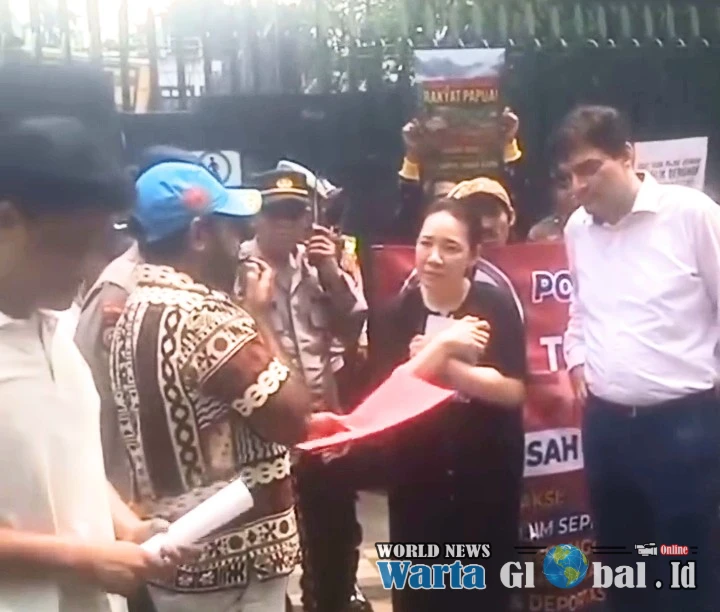
On Monday, November 23, 2026, the Indonesian youth organization Poros Pemuda Peduli Indonesia held a protest outside the German Embassy in Jakarta. The demonstrators called on the German government and the European Union to audit the Berghof Foundation's funding and clarify allegations concerning its facilitation of a process known as the Reconciliation Pathway, reportedly associated with efforts to unite factions within the ULMWP.
The protest coordinator, Alfred Pabika, raised serious allegations regarding the use of public funds for activities allegedly connected to Papuan separatist networks.
However, allegations involving weapons financing, terrorism, and illegal activities must be established through verifiable financial records, independent audits, and investigations by competent authorities.
FUNDING FIGURES THAT DEMAND ANSWERS
The Berghof Foundation's 2024 transparency report provides important financial information that deserves public scrutiny.
According to its reported funding breakdown, two major donors each contributed more than 10 percent of the organization's total funding:
German Federal Foreign Office (Auswärtiges Amt): 32.8 percent.
European Union: 16.3 percent.
Combined contribution: 49.1 percent.
These figures demonstrate the significant role of European public funding in the organization's operations.
However, substantial donor contributions do not, by themselves, prove that funds were transferred to separatist groups or used to purchase weapons.
That distinction is essential.
The public deserves transparency regarding project budgets, beneficiaries, implementing partners, financial oversight mechanisms, and accountability for every allocation of public money.
If public funding is involved in politically sensitive activities connected to Papua, transparency must not be optional.
PAPUA MUST NOT BECOME A PLAYGROUND FOR FOREIGN INTERESTS
Papua faces longstanding challenges that cannot be resolved solely through security operations or international political maneuvering.
Civilians, particularly women, children, teachers, healthcare workers, laborers, and church workers, must not continue to bear the consequences of armed conflict.
The right to live in safety must take precedence over the political interests of any group.
Humanitarian dialogue is not a crime. However, foreign organizations operating in politically sensitive domestic conflicts must also remain subject to transparency, accountability, and applicable Indonesian law.
Governments and civil society must clearly distinguish between peaceful advocacy, dialogue facilitation, political activities, and support for armed violence.
These are not interchangeable activities.
FIVE QUESTIONS THAT CANNOT BE IGNORED
Several critical questions require clear and public answers:
Did the Berghof Foundation facilitate the Reconciliation Pathway process reportedly associated with the ULMWP?
Who participated in the process, and what was its official mandate?
Was any specific funding allocated to activities conducted in Papua or overseas?
What oversight mechanisms do German and European Union donors apply to monitor the use of their funding?
Were Indonesian authorities informed of the activities under scrutiny, and what was their official position?
Without verifiable documents and transparent answers, allegations risk developing into competing political narratives that ultimately harm the people of Papua.
NATIONAL SOVEREIGNTY AND HUMANITY MUST NOT BE SET AGAINST EACH OTHER
Indonesia has the right to defend its national sovereignty. However, sovereignty must never become an excuse to disregard human rights.
Likewise, humanitarian concerns must never be used to justify funding violence or unlawful interference in another country's domestic affairs.
The German government, the European Union, the Berghof Foundation, and the Indonesian government should provide clear explanations through a transparent process that can be independently examined.
Papua does not need more conflict, geopolitical power struggles, or propaganda from any side.
Papua needs security, justice, civilian protection, and genuine dialogue.
If public funds have indeed been misused to support violence, the truth must be exposed. But if the allegations cannot be proven, public judgment must not be built on speculation.
Humanity must remain the red line. National sovereignty must be protected. Transparency must never be negotiable.