

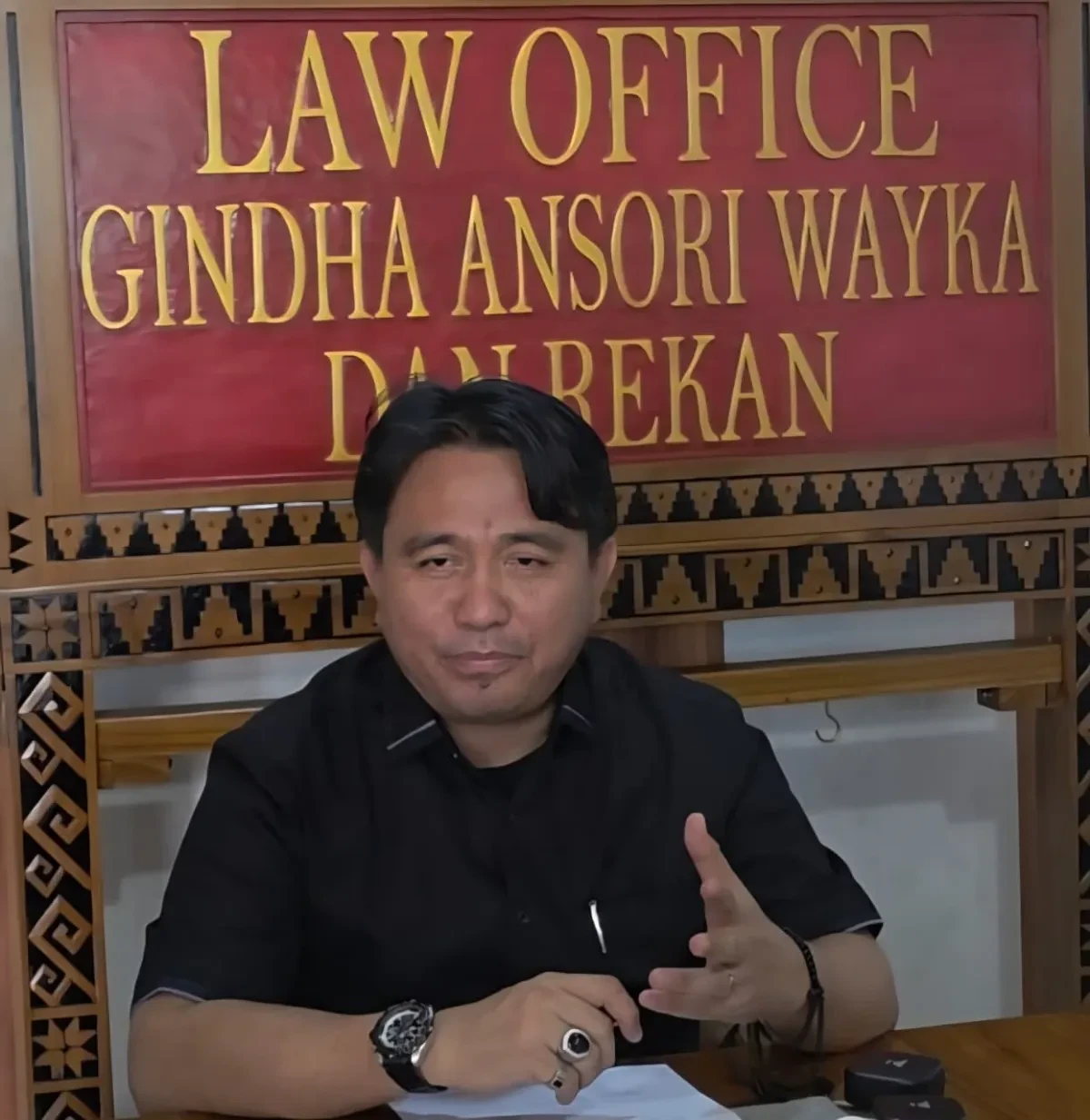
The expiration of Cultivation Rights (Hak Guna Usaha/HGU) No. 21 of 1995 held by PTPN 1 Regional 7 has once again brought to the surface a longstanding dispute involving approximately 301 hectares of land, known as Umbul Former Nyapah Reboh, which is claimed as customary land belonging to the Lawang Taji Clan of MBPBR, Negeri Besar, Way Kanan Regency.
The dispute is not new. A number of documents cited as the basis of the community's claim indicate that discussions concerning land rights, compensation and settlement have taken place for decades. However, according to the party claiming ownership of the land, those rights have yet to be fully resolved.
The series of facts also raises serious questions regarding the legal basis for the control and management of the land while it was included within PTPN 1 Regional 7's HGU area, as well as how the community's claimed rights should be addressed following the expiration of HGU No. 21 of 1995.
The following facts form the basis of the dispute:
First, our client, EDY SETIAWAN, S.Kom., Glr. St. Raja Mula Jadi, is the eldest son of the late Bpk. Junardi, Glr. St. Raja Marga, the traditional leader of the Lawang Taji Clan, Buay Pemuka Bangsa Raja (MBPBR), Negeri Besar Village, Negeri Besar District, Way Kanan Regency.
In matters concerning customary affairs, our client acts on behalf of the traditional leadership of the Lawang Taji Clan, Buay Pemuka Bangsa Raja (MBPBR), Negeri Besar Village, Negeri Besar District, Way Kanan Regency.
Second, our client was appointed to handle the collection of Community Care Funds/Compensation for residents of Kaliawi Village in connection with the management of approximately 301 hectares of land, formerly known as Nyapah Reboh, which was included in HGU No. 21 of 1995 belonging to PTPN 1 Regional 7, formerly PTPN VII, Bunga Mayang Business Unit.
Third, the existence of the approximately 301-hectare parcel within HGU No. 21 of 1995 was also referenced in a letter from PTPN 1 Regional 7's Bunga Mayang Business Unit to the Director of Human Resources and General Affairs of PTPN 1 Regional 7 Lampung, Letter No. BUMA/7.03/080/98, Attachment: Included, Subject: Settlement of Compensation Issues for Umbul Nyapah Reboh Land Within HGU No. 21 of 1995 (Bunga Mayang Business Unit) dated December 7, 1998.
The conclusion on page 4 of the letter states that there were still rights of the Umbul Nyapah Reboh community that had not been settled.
This document is a significant point in the dispute because it indicates that the issue of community rights over the land had been recorded in company documentation for many years.
Fourth, the Way Kanan Regency Government also reportedly facilitated efforts to resolve the matter. The Regent of Way Kanan, through Letter No. 140/400/01-WK/2007, Attachment: -, Subject: Review of Cultivation Rights (HGU) No. 21 of 1995 of PTPN VII (Persero), Tulang Bawang Region, dated August 27, 2007, addressed the letter to the National Land Agency of the Republic of Indonesia (BPN RI).
The letter stated that PTPN VII (Persero), now PTPN 1 Regional 7, had not compensated the owners, yet had obtained HGU over the land. The condition was considered highly detrimental to the community.
Fifth, in an effort to resolve the approximately 301-hectare land issue, PTPN 1 Regional 7 Lampung also sent a letter to our client's parent through his legal representative.
Through Letter No. 7.7/3/01/2010, Attachment: 1 set, Subject: Land Issues of Umbul Nyapah Reboh, Bunga Mayang Business Unit (HGU 21 of 1995) dated February 16, 2010, PTPN 1 Regional 7 was stated to have expressed its willingness and readiness to provide compensation to eligible residents amounting to Rp2,500,000 per hectare, based on the results of a meeting held on February 1, 2010.
Sixth, the matter was even brought into a legal settlement process. The Board of Directors of PTPN VII granted authority to the Lampung High Prosecutor's Office as State Attorney through Letter No. 7.7/SKK/03/2010 dated February 22, 2010, to resolve the land dispute.
However, according to our client's account, the process has yet to result in a settlement considered final and satisfactory.
Seventh, acting as the authorized party, the Lampung High Prosecutor's Office, in its capacity as State Attorney, reportedly sent three letters to our client's parent.
The letters were numbered B-81/N.8.6/G/01/2012 dated January 2, 2012; B-85/N.8.6/G/01/2012 dated January 9, 2012; and B-86/N.8.6/G/01/2012 dated January 16, 2012. All three carried the subject: Collection of Community Care Funds for Kaliawi Village Residents.
Eighth, despite the existence of a series of documents, facilitation by the local government, the appointment of the Lampung High Prosecutor's Office as State Attorney, and supporting evidence from the party claiming ownership of the land, the dispute, according to our client, remains unresolved.
This situation raises a fundamental question: if the community's rights had been acknowledged as an unresolved matter, why has the settlement dragged on until the HGU serving as the basis for control over the land has expired?
Ninth, as the appointed Legal Counsel/Attorney, we sent a letter to PTPN 1 Regional 7 as a follow-up to the letter from the Lampung High Prosecutor's Office.
The letter was numbered 02032/B/GAW-Law Office/VII/2025, Attachment: 1 file, Subject: Request for Disbursement of Community Care Funds for Kaliawi Village Residents, dated July 14, 2025.
However, according to our side, the letter has yet to receive a response or follow-up action from PTPN 1 Regional 7.
Tenth, the matter has become increasingly significant because the approximately 301 hectares of land are said to have been under the control and management of PTPN 1 Regional 7 based on HGU No. 21 of 1995, while the rights claimed by our client have allegedly not been granted or settled.
With the expiration of HGU No. 21 of 1995, the issue is no longer merely about the history of land control. It concerns legal certainty over the land's status, community rights, the obligations of the HGU holder, and the legality of subsequent control and utilization of the land.
Eleventh, based on the series of circumstances described above, we will submit a written report to the Lampung Regional Police Chief concerning the alleged unlawful control of approximately 301 hectares of land claimed as belonging to the Lawang Taji Clan of MBPBR, Negeri Besar, Way Kanan Regency, under HGU No. 21 of 1995.
The report will be submitted for further examination in accordance with the authority of law enforcement agencies in order to obtain legal certainty and a resolution to the dispute.
Twelfth, we will also submit the matter to the Ministry of Agrarian Affairs and Spatial Planning/National Land Agency (ATR/BPN) of the Republic of Indonesia and request that the community's claimed rights be taken into consideration in any future land-related process involving the disputed area, including as a basis for considering the postponement of any HGU extension before the rights and alleged losses claimed by our client are resolved.
The approximately 301-hectare Former Nyapah Reboh dispute has therefore entered a new phase. The expiration of HGU No. 21 of 1995 should become an opportunity to disclose all relevant documents and objectively examine who holds the legal rights, what obligations remain outstanding, and what the legal status of the land is under Indonesia's agrarian framework.
An agrarian dispute cannot be resolved merely through repeated correspondence. When there are company documents, letters from the regional government, a settlement process that once involved the State Attorney, and discussions concerning compensation, the entire chain of events deserves to be examined transparently by the competent authorities.
PTPN 1 Regional 7 also has the right to provide clarification and present the documents and legal basis supporting the company's position. In this way, the matter will not remain merely a one-sided claim, but can instead be assessed on the basis of evidence, land-right status, and applicable law.
Writer:
Gindha Ansori Wayka
Views Post


