

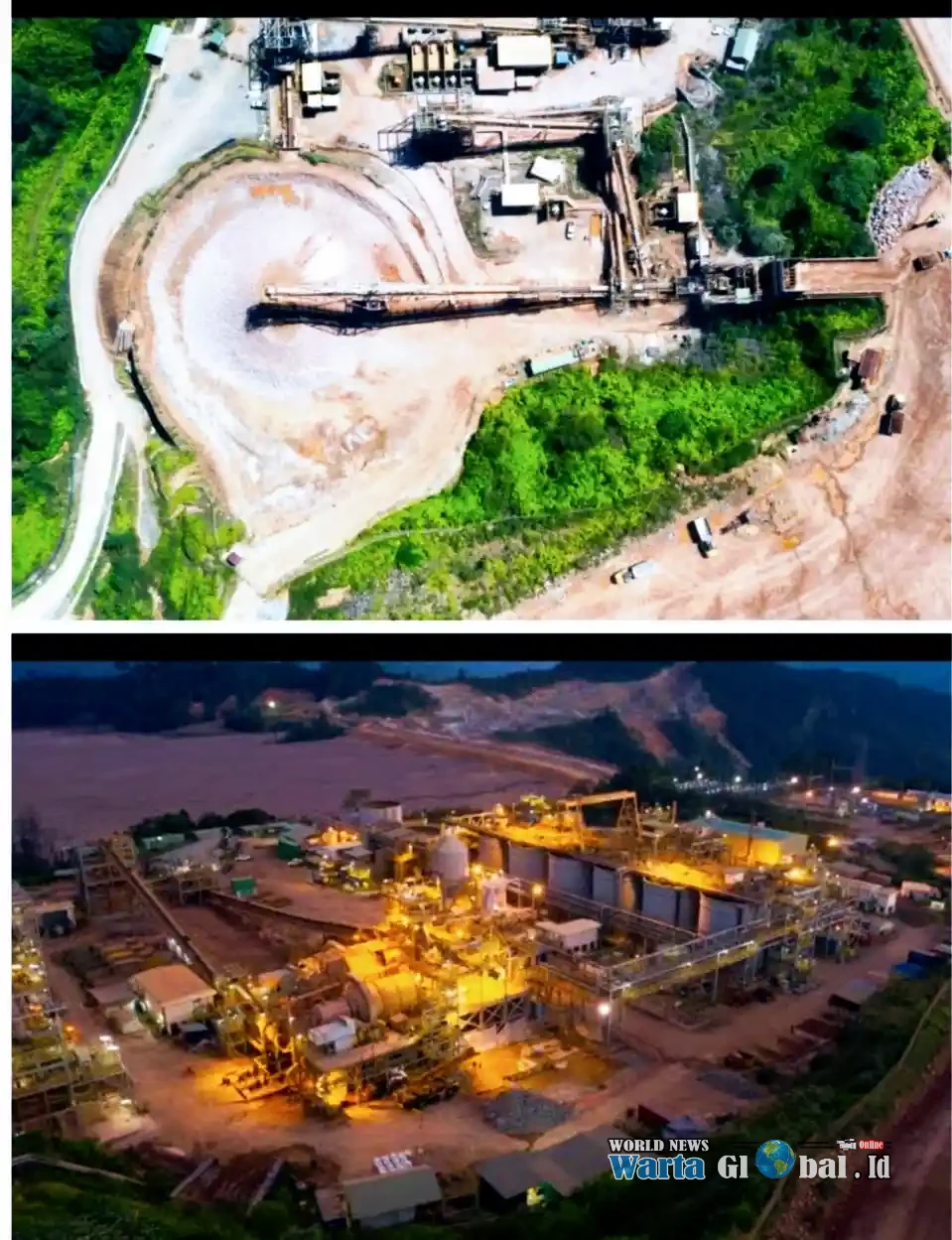
SOUTH TAPANULI 2/11/2025, WorldWartaGlobal.id
The Martabe Gold Mine, managed by PT Agincourt Resources, paid US$2.35 million (approximately Rp 31.5 billion) in royalties to the state treasury in 2015 from gold and silver sales. This figure represents a portion of total gold sales of US$351 million and silver of US$40 million that year, indicating the significant economic impact of the mine located in Batang Toru District, North Sumatra.
The royalty distribution mechanism is regulated by Law No. 33 of 2004, with 80 percent of the royalty funds allocated to the regional government and the remaining 20 percent to the central government. Of the regional royalty allocation, 32 percent goes to the producing regencies, including South Tapanuli, while the remainder is distributed among the province and other regencies/cities in North Sumatra.
This scheme demonstrates an effort to share profits fairly, although criticism regarding the real benefits for the community remains. President Director of PT Agincourt Resources, Tim Duffy, emphasized that the company has fulfilled its obligations under the work contract and government regulations, including making various tax and contribution payments, as well as supporting national development.
The company's total contribution obligations in 2015 reached IDR 731 billion, covering income tax, permit fees, land and building tax, reforestation funds, and other taxes. The Martabe mine, which began full production in 2013, manages large resources, with reserves of 7.4 million ounces of gold and 69 million ounces of silver.
Large-scale production and efficient costs allow the mine to have a capacity of around 250,000 ounces of gold and 2-3 million ounces of silver per year. In terms of workforce, more than 2,000 people work at Martabe, with 70 percent coming from the 15 villages surrounding the mine and nearby areas, providing a direct social impact in the form of employment opportunities for the local community. However, environmental and social concerns remain a major challenge.
The destruction of Batang Toru's tropical forests and the issue of limited welfare improvements amidst high mining activities remain critical notes for stakeholders. Walhi and a number of environmental activists assess that mining profits have not been fully enjoyed by the wider community and have even contributed to the destruction of essential ecosystems.
The Martabe case demonstrates the complexity of natural resource management: the balance between national and regional economic contributions, job creation, and the responsibility to preserve nature and support social progress is a real test for all stakeholders.
Views Post


