

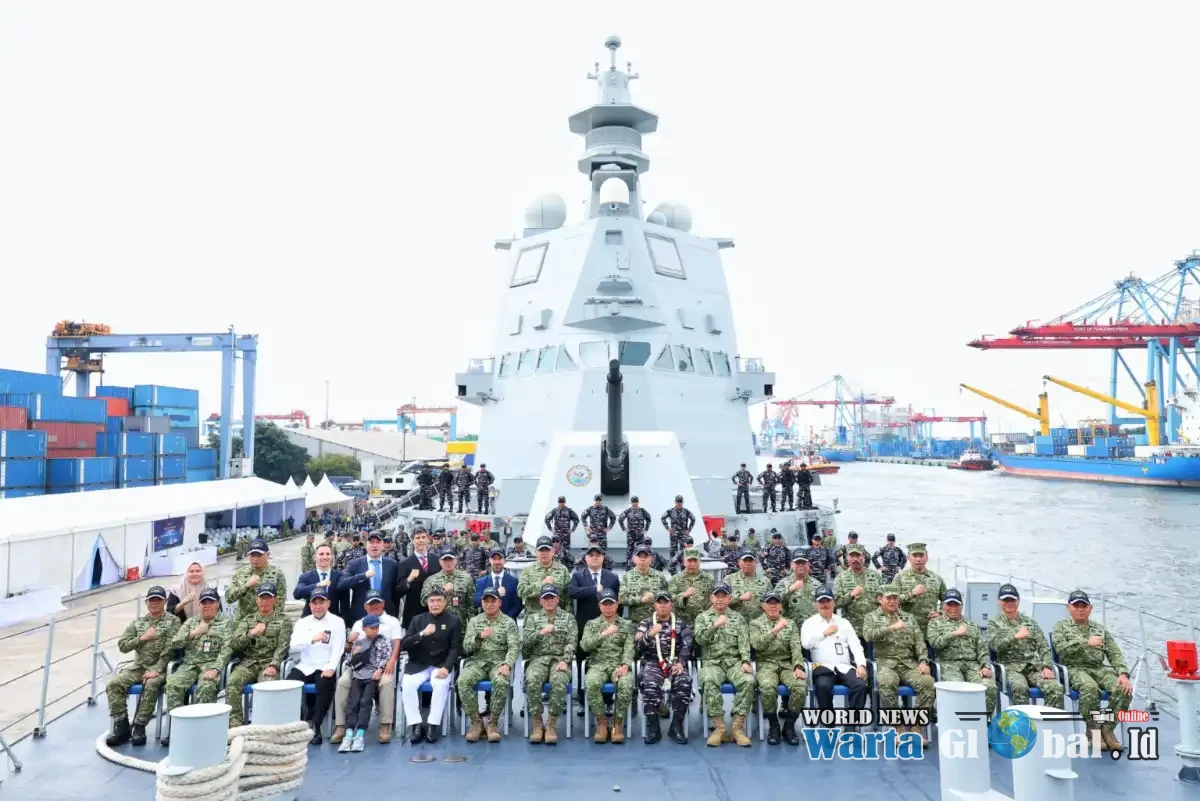
Jakarta, WartaGlobal.Id – The arrival of KRI Prabu Siliwangi-321 at Pier 107, Tanjung Priok, on Thursday (March 26, 2026), was not merely a military ceremony, but a marker of a new phase in Indonesia’s increasingly assertive and measured naval modernization. The Indonesian Navy’s newest warship was welcomed in an official ceremony led by TNI Commander General Agus Subiyanto, and attended by the Secretary General of the Ministry of Defense, Lieutenant General Tri Budi Utomo.
This Pattugliatore Polivalente d’Altura (PPA)-type vessel, manufactured by Fincantieri, represents a significant technological leap in Indonesia’s defense equipment. Measuring over 140 meters in length and displacing more than 6,000 tons, KRI Prabu Siliwangi-321 is equipped with a Naval Cockpit system—an integrated digital navigation and weapons platform previously associated with modern fighter jet cockpit technology.
Its 44-day voyage from La Spezia, Italy, across the Atlantic and Indian Oceans, underscores the ship’s operational readiness for long-range missions. More importantly, its combat capabilities stand out. The vessel is fitted with a 127 mm Vulcano main gun, making it the first platform in the Indonesian Navy to feature large-caliber precision strike capability at extended ranges.
Chief of Naval Staff Muhammad Ali emphasized that the presence of this ship will enhance Indonesia’s deterrence posture in an increasingly dynamic region. He noted that the ship’s advanced sensor and combat systems surpass those of previous classes, further strengthening the nation’s maritime defense structure.
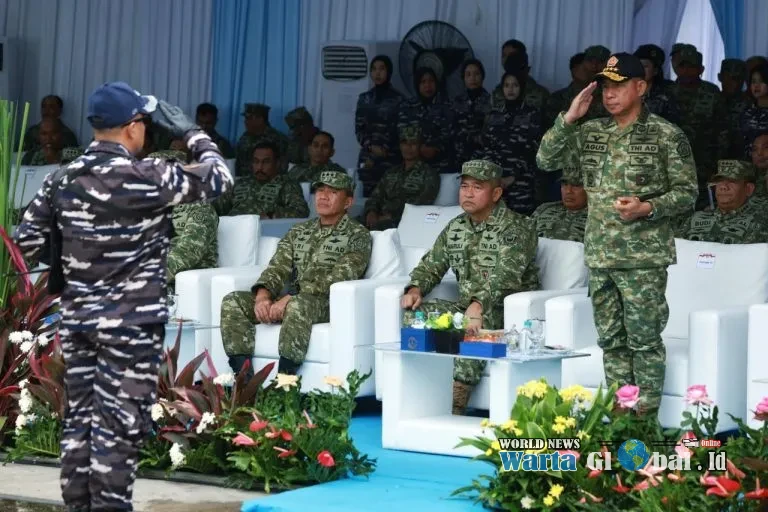
The decision to station the ship within the Escort Unit of Fleet Command II (Koarmada II) in Surabaya is also strategic. The base’s comprehensive infrastructure is considered essential to support the operation of such high-tech vessels, including maintenance of digital systems and advanced weaponry.
Beyond its combat role, the ship is also designed with flexibility for non-war missions such as humanitarian assistance and search and rescue (SAR) operations. This reflects Indonesia’s defense policy direction, which is not solely focused on military strength, but also on responding to humanitarian crises in the region.
Nevertheless, the strengthening of defense equipment must be viewed critically. Budget transparency, human resource readiness, and system interoperability remain real challenges that must be addressed to ensure that modernization goes beyond symbolism and translates into tangible combat readiness.
In line with journalistic ethics, this information is presented with principles of accuracy and balance, considering that defense issues involve strategic national interests and public perception.
A source within the defense sector stated, “This is not merely the addition of a new ship, but a signal that Indonesia is becoming serious about building a naval force that will be reckoned with in the region.”
Views Post


